Evaluation and treatment of temporomandibular joint (TMJ) disorders in West Hills, CA — disc displacement, degenerative joint disease, and myofascial pain.
Understanding Your Jaw Joint
You have two temporomandibular joints, one in front of each ear, connecting the lower jaw to the skull. A small cartilage disc inside each joint cushions it as the jaw hinges and slides.
TMJ disorders fall into two main groups:
- Muscle problems: tight, overworked or tender chewing muscles, often with clenching or grinding. This is the most common cause of jaw pain.
- Joint problems: the disc slipping out of place (which can cause clicking, catching or locking), or wear-and-tear arthritis of the joint, which can cause a grating sound and stiffness.
Telling these apart matters, because they are treated differently.
What to Expect at the Evaluation
The first visit includes a detailed pain and medical history, a standardized examination of jaw movement, joint sounds and muscle tenderness based on the Diagnostic Criteria for Temporomandibular Disorders (DC/TMD), and screening for headache, sleep problems and other contributors. Imaging such as cone-beam CT or MRI is ordered only when the findings suggest it would change management. You leave with a diagnosis and a written plan.
Conservative Care Comes First
Most temporomandibular disorders improve with reversible treatment. Depending on the diagnosis, a plan may include:
- Self-care: soft diet during flares, heat or cold, and limiting wide opening and gum chewing
- Jaw exercises and physical therapy
- Short courses of medication when appropriate
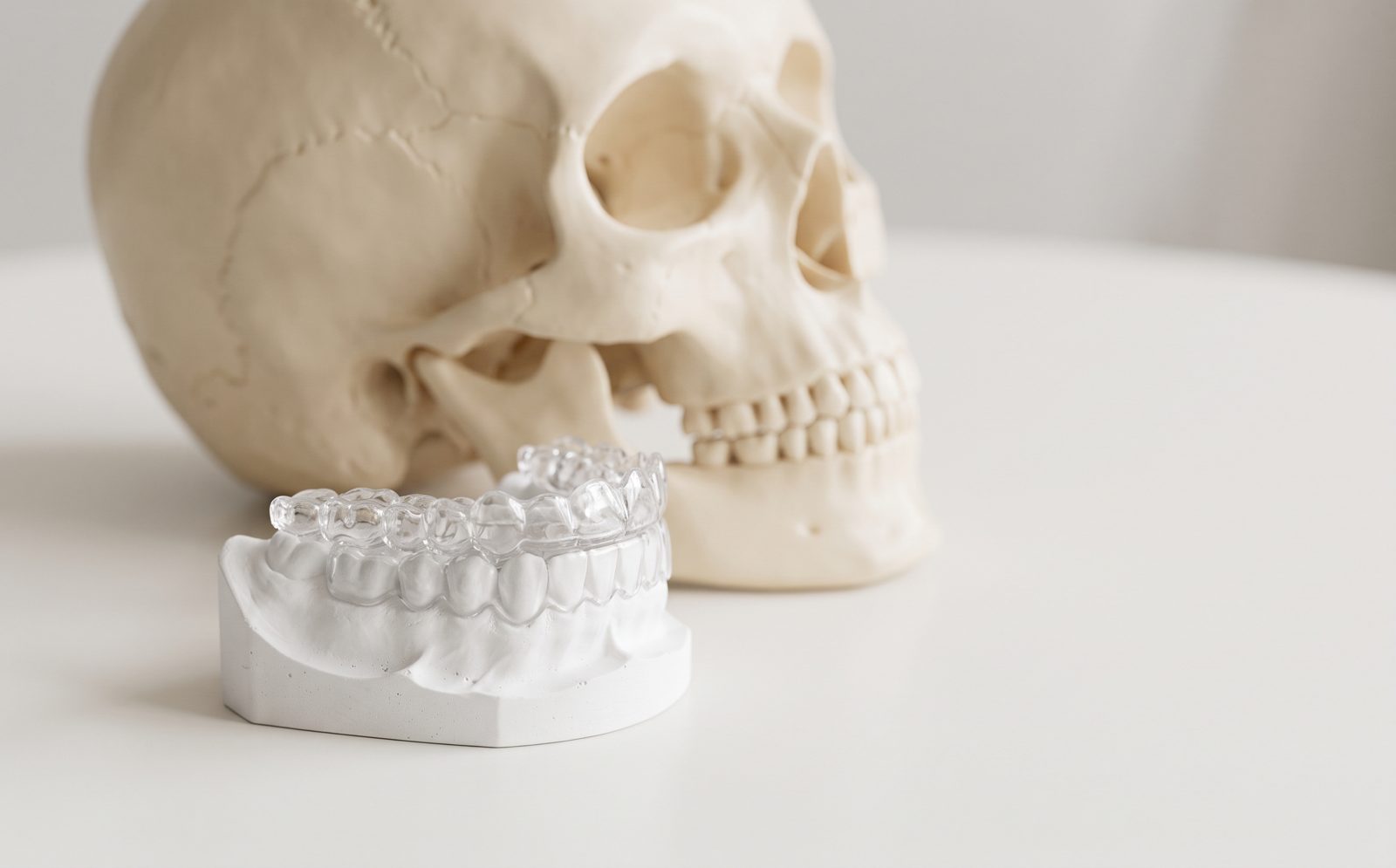
- A custom stabilization splint, particularly for night-time clenching or grinding
- Attention to sleep quality, including evaluation for sleep apnea when symptoms suggest it
When Further Treatment Is Considered
If symptoms persist despite conservative care, options may include joint procedures such as arthrocentesis, targeted injections, or referral to an oral and maxillofacial surgeon. Irreversible treatments such as bite adjustment or extensive dental work are not used as a first approach for TMD.
Insurance
TMD evaluation and treatment are often billed to medical insurance. Coverage for splints, physical therapy and procedures varies widely, and some plans exclude TMJ treatment, so benefits are reviewed before treatment begins.
Patients are seen at the West Hills office from across Los Angeles County and Ventura County.
Common Questions
Does jaw clicking always need treatment?
No. Painless clicking is common and often needs no treatment. Clicking with pain, catching or locking should be evaluated.
Will a night guard fix TMJ pain?
A custom stabilization splint can help some patients, particularly with night-time clenching, but it is one part of a plan rather than a cure. Over-the-counter guards can make symptoms worse in some people.
Is TMJ surgery common?
No. Most patients improve with conservative, reversible care. Surgery is considered only for specific joint conditions that do not respond.
Can TMJ pain and sleep apnea be related?
They often occur together, and poor sleep can increase pain sensitivity. The evaluation looks at both so that treatment for one does not worsen the other.
Clinical details for referring providers
Anatomy and Pathophysiology
The temporomandibular joint (TMJ) is a bilateral synovial articulation between the mandibular condyle and the temporal bone, separated by a fibrocartilaginous articular disc. Temporomandibular disorders (TMDs) are classified into joint-based (arthrogenous) and muscle-based (myogenous) categories, per the Diagnostic Criteria for Temporomandibular Disorders (DC/TMD).
Articular Disc Displacement
Disc displacement occurs when the articular disc is positioned anterior, or anteromedial, to the condylar head at rest.
- Disc displacement with reduction: the disc returns to a normal position relative to the condyle during mouth opening, typically producing a reciprocal click.
- Disc displacement without reduction: the disc remains displaced through the range of motion, producing restricted mandibular opening (closed lock) with or without pain.
Degenerative Joint Disease
Degenerative joint disease (DJD) of the TMJ involves progressive breakdown of articular cartilage and subchondral bone, radiographically characterized by condylar flattening, erosion, osteophyte formation, and joint space narrowing. Crepitus on auscultation is a clinical correlate of DJD.
Myofascial Pain Component
Myofascial pain involves the masticatory muscles (masseter, temporalis, medial and lateral pterygoids) and is characterized by localized or referred pain reproducible on palpation, often associated with parafunctional activity (bruxism, clenching).
Diagnostic Evaluation
Clinical examination includes range of motion (opening, lateral excursion, protrusion), joint sounds, and palpation of TMJ and masticatory muscles. Imaging includes panoramic radiography for gross osseous changes, cone-beam CT for detailed osseous architecture, and MRI for disc position and soft tissue assessment.
Management
Management follows a conservative-to-invasive treatment hierarchy: patient education and dietary modification, occlusal splint therapy, physical therapy, pharmacological management (NSAIDs, muscle relaxants, as indicated), and referral for intra-articular injection or surgical intervention when indicated by intra-articular pathology unresponsive to conservative care.
